

Key Takeaways
- Set a selling goal before starting repairs or cosmetic work.
- Prioritize maintenance, cleanliness, light, and a clear room layout.
- Choose small, high-impact improvements before considering major renovations.
- Organize permit records, invoices, warranties, and renovation details.
- Price against current comparable homes, not a hoped-for result.
- Prepare a plan for showings, feedback, offers, and closing.
Selling a home in Toronto’s East End takes more than putting a sign on the lawn. From older brick semis near Queen Street East to family homes closer to the Bluffs, buyers notice condition, layout, light, and how easily they can picture daily life in the space. The Beaches real estate experts The Richards Group are a Toronto real estate team serving East End communities, including The Beaches, with selling support that includes home valuation, staging, design and project coordination, and marketing guidance. That local perspective can be particularly useful when preparing a property for buyers who know the area well.
The goal is not to make every home look brand new. It is to remove distractions, resolve concerns that could reduce buyer confidence, and present the property in a clear, practical way. A thoughtful plan can help sellers make better decisions about where to spend, what to disclose, and when to launch.
Why Preparation Matters
Broad market conditions can influence how much competition a seller faces, but a Toronto East End home is ultimately judged against nearby alternatives with a similar location, style, condition, and price range. Sellers can use the GTA market outlook as general context, then focus more closely on recent activity for their own street and property type. When buyers have several homes to consider, accurate pricing and strong presentation become especially important.
Start With a Realistic Selling Goal
Before booking painters or photographers, define what a successful sale needs to accomplish. The priority may be a preferred closing date, a target net amount, a quick move, or flexibility while buying another property.
- Estimate your ideal move date and any overlap with a new purchase.
- Review the mortgage balance, expected selling costs, and moving expenses.
- Consider whether temporary housing or bridge financing could be necessary.
- Decide how you will balance price, speed, certainty, and closing flexibility.
- Identify practical constraints, including pets, work schedules, children, or mobility needs.
Review the Home Before Spending Money
Walk through the home as a first-time visitor would. The first few minutes often shape a buyer’s overall impression, so begin with the entrance, main living area, kitchen, and bathrooms. Look for clutter, poor lighting, damaged finishes, signs of moisture, sticky doors, loose hardware, and rooms without a clear purpose.
Repairs That Build Confidence
Buyers may accept a dated finish more easily than evidence of neglected maintenance. Focus first on visible and functional issues:
- Repair leaking taps, running toilets, damaged trim, and loose cabinet hardware.
- Replace burned-out bulbs and make lighting consistent from room to room.
- Patch wall damage, touch up worn paint, and clean floors, windows, and vents.
- Clear gutters and exterior paths, and address drainage concerns where appropriate.
- Keep service records, warranties, invoices, and contractor contacts together.
Renovate Selectively
A full kitchen replacement or luxury bathroom project can add cost, disruption, and delay. Unless a renovation solves a clear problem relative to similar local homes, smaller updates may be the better choice. Neutral paint, improved lighting, refreshed hardware, deep cleaning, carpet care, and minor repairs can make a meaningful difference without turning the selling process into a construction project.
Before undertaking substantial work, compare the cost and timeline with comparable sales. A clean, functional, well-staged home may be more useful than an expensive, highly personal renovation or an unfinished home at listing time.
Check Permits and Paperwork
Older East End homes often have additions, finished basements, altered layouts, or upgraded mechanical systems. The City of Toronto notes that permits may be required for new buildings, additions, material alterations, certain basement work, plumbing changes, and other projects. Review when a building permit is required if the home has a renovation history that needs clarification.
- Gather permit numbers, plans, final inspections, invoices, and warranties.
- Confirm details for basement bedrooms, separate suites, additions, or new entrances.
- Seek qualified advice if previous work is unclear.
- Disclose known concerns rather than waiting for an inspection to uncover them.
Make Every Room Easy to Understand
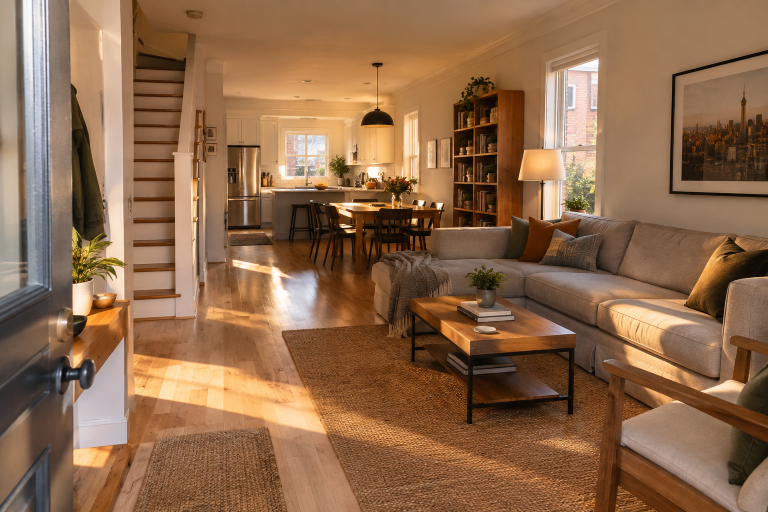
Toronto homes can have narrow rooms, rear additions, divided living areas, and unconventional storage. Help buyers read the layout quickly by removing furniture that blocks walkways, opening sightlines from the entrance, and giving each room a clear purpose. Keep enough furniture to show scale, but avoid crowded shelves, packed closets, and surfaces filled with personal items.
Stage for Light, Flow, and Everyday Living
- Start at the entrance. Remove excess shoes, coats, packages, and furniture.
- Brighten living spaces. Open window coverings and use working, consistent light fixtures.
- Simplify the kitchen. Clear counters while leaving a few useful, attractive items.
- Create calm bedrooms. Use clean bedding and reduce unnecessary furniture.
- Show outdoor potential. Sweep porches, tidy gardens, and, where possible, define a seating area.
Improve Curb Appeal Without Overspending
The exterior starts the showing before a buyer reaches the front door. Wash steps and windows, trim plants that block the entry, replace damaged house numbers or exterior lights, and keep the path clear. Simple planters and a tidy porch usually create a stronger impression than excessive seasonal decoration.
Build a Complete Listing Package
Professional photography should accurately depict the home, with attention to lighting, room flow, storage, parking, and outdoor space. A floor plan can help buyers understand dimensions and layout before booking a visit. If the property has an unusual configuration, video or a virtual tour may help viewers see how the spaces connect. In the written description, highlight meaningful improvements with dates when records are available.
Price From Evidence, Not Emotion
An asking price is a strategy, while a market-supported price is based on evidence. Review recent sales and current competition with similar locations, lots, parking, size, condition, and renovation levels. Also consider how long comparable homes took to sell, whether they needed work, and how many qualified buyers are likely to search in that price range.
Plan Showings and Offers Before Launch
- Create a daily reset list for beds, counters, lights, bins, and pet items.
- Remove valuables, medication, and sensitive documents before showings.
- Review feedback for recurring concerns about price, condition, layout, or presentation.
- Compare offers by deposit, conditions, financing risk, closing date, and price.
Final Checklist
- Repairs are complete, and rooms are clean, bright, and purposeful.
- Renovation and permit records are organized.
- Curb appeal, photography, floor plans, and showing instructions are ready.
- The listing price reflects current comparable evidence.
- The closing plan supports the next move.
A successful Toronto East End sale begins well before the listing appears online. Fix issues buyers will notice, present the home clearly, organize important records, and make pricing decisions based on current evidence. That practical approach can help buyers feel more confident and help sellers avoid spending money on work that does not serve the sale.

